For years, stretching advice has been a mix of gym lore, outdated guidelines, and well-meaning but unscientific recommendations. How long should you hold a stretch? Does stretching actually prevent injuries? Can it make you stronger? Thanks to an explosion of rigorous scientific research in 2024 and 2025, we finally have clear, evidence-based answers—and some of the findings may surprise you.
At The Stretch Masters in San Jose, our physician-supervised stretch therapists stay current with the latest research to ensure every session delivers maximum benefit. Here’s what cutting-edge science reveals about how to stretch smarter, not harder.
The Eight-Minute Revolution: Less Is More
Perhaps the most surprising finding comes from a landmark 2024 meta-analysis published in Sports Medicine by researchers at the University of South Australia. After systematically reviewing 188 studies involving 8,095 adults from 25 countries across six continents, they discovered something remarkable: flexibility improvements max out at just three minutes of stretching per muscle per session—and eight minutes per muscle per week.
That’s right. Stretching beyond three minutes in a single session provides no additional meaningful benefit in flexibility. This challenges the “more is better” mentality that has dominated fitness culture for decades.
The study found that a single session of static stretching leads to a moderate increase in flexibility, while longer-term stretching training undertaken regularly over several weeks produces even larger improvements. These benefits occurred regardless of the specific muscle group, stretching intensity, the person’s sex, health status, training level, or how frequently they stretched each week.
Static Stretching: Vindicated by Science
Static stretching—holding a position for an extended period—has faced criticism in recent years, with some fitness professionals suggesting it decreases performance and should be avoided. However, a comprehensive 2025 meta-analysis examining 189 studies with 6,654 adults tells a different story.
Researchers found a moderate positive effect of acute static stretching on flexibility, and chronic static stretching (performed regularly over weeks or months) produced large positive effects. Perhaps more surprisingly, the analysis revealed that long-term static stretching actually improved both muscle strength and power—not decreased them as previously feared.
The strength improvements were particularly notable for sedentary individuals, suggesting that stretching may serve as an accessible entry point into physical fitness for those who aren’t currently active. Women and older adults showed especially pronounced benefits from consistent stretching programs.
Dynamic Stretching Delivers Quick Results
For those who prefer movement-based approaches, a 2025 meta-analysis published in the Journal of Sports Science and Medicine examined 17 studies on dynamic and ballistic stretching. The researchers found a small but significant increase in flexibility following these active stretching methods.
What’s particularly interesting is that the benefits applied across age groups—both younger and middle-aged to older adults experienced similar improvements. This means dynamic stretching isn’t just for athletes; it’s effective for anyone looking to improve their range of motion.
A 2025 study on contemporary dancers found that dynamic stretching and PNF stretching showed progressive improvements over 15 minutes post-stretching, while static stretching peaked at 10 minutes. This suggests that different stretching methods may be optimal depending on your timing and goals.
The PNF Advantage: Why Professional Stretching Matters
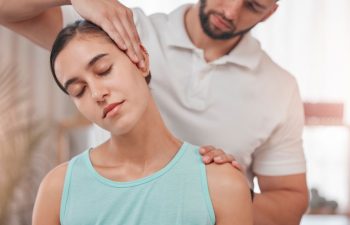
Proprioceptive Neuromuscular Facilitation (PNF) stretching consistently emerges as one of the most effective techniques in scientific literature. This method, which involves cycles of muscle contraction followed by relaxation and deeper stretching, requires a partner or trained professional to perform correctly.
Research shows that PNF techniques work by engaging your nervous system in ways that self-stretching simply cannot replicate. When you stretch on your own, your body’s stretch reflex—a protective mechanism—limits how far you can safely go. This reflex causes the muscle to contract when it senses it’s being stretched too quickly or too far.
Professional assisted stretching works with this nervous system response rather than against it. By desensitizing muscle spindles through slow, controlled resistance, a trained therapist can effectively “calm down” the stretch reflex, allowing for a deeper, more effective stretch.
Golgi tendon organs, located in the tendons, also play a crucial role. These receptors monitor muscle tension, and when properly engaged through PNF techniques, they trigger a relaxation response that permits greater lengthening of the muscle tissue.
The Fascia Factor: Beyond Muscle Stretching
Modern research increasingly recognizes that flexibility isn’t just about muscles—it’s about fascia, the connective tissue that surrounds and interconnects every structure in your body. Myofascial restrictions can limit range of motion even when muscles themselves are capable of lengthening further.
At The Stretch Masters, our unique integrated approach combines assisted stretching with advanced myofascial release techniques. This dual strategy addresses both muscular and fascial restrictions, providing a more comprehensive path to improved mobility.
Unlike many stretching studios staffed by fitness enthusiasts with minimal training, our team includes physicians and physical therapists who understand the intricate relationship between muscles, fascia, nerves, and joints. This musculoskeletal expertise allows us to identify and address the root causes of restricted movement.
What This Means for Your Stretching Routine
Based on the latest research, here are evidence-based recommendations for optimizing your flexibility:
- Quality Over Quantity: Three minutes per muscle per session is sufficient. More isn’t necessarily better.
- Consistency Wins: Eight minutes per muscle per week, spread across multiple sessions, maximizes long-term flexibility gains.
- Don’t Fear Static Stretching: Despite past criticism, static stretching improves flexibility and doesn’t harm—and may actually improve—strength when performed as part of a regular routine.
- Consider Professional Help: PNF and assisted stretching techniques offer deeper, more effective stretches than you can achieve alone, particularly for stubborn muscle groups.
- Address the Whole System: Optimal results come from addressing both muscular and fascial restrictions.
Why Professional Assisted Stretching Makes a Difference
Self-stretching certainly has its place in a daily wellness routine. However, research consistently demonstrates that professional assisted stretching achieves results that are difficult or impossible to replicate on your own.
When you work with a trained stretch therapist, they can isolate specific muscles by stabilizing different parts of your body, apply precise pressure at optimal angles, and guide you through PNF sequences that require external resistance. They can also identify compensatory patterns—where your body cheats by recruiting other muscles—and correct them in real time.
For San Jose and Los Gatos residents dealing with the physical demands of Silicon Valley’s desk-bound work culture, professional stretching offers targeted relief for common problem areas like tight hip flexors, restricted hamstrings, and tension-laden neck and shoulders.
Experience the Research in Action at The Stretch Masters
Science has spoken: effective stretching doesn’t require hours of your time, but it does require proper technique, consistency, and often professional guidance to achieve optimal results. At The Stretch Masters, our physician-supervised stretch therapists translate this research into personalized sessions designed for your unique body and goals.
Whether you’re an athlete seeking peak performance, a professional battling desk-bound tension, or someone simply wanting to move more freely through daily life, evidence-based assisted stretching can transform your mobility and wellbeing.
Schedule Your Session at The Stretch Masters
Ready to experience what science-backed stretching can do for your body? The Stretch Masters combines expert musculoskeletal knowledge with advanced myofascial release techniques to deliver results that go beyond what you can achieve on your own.
Posted on behalf of
1610 Blossom Hill Road, Suite 4
San Jose, CA 95124
Phone: (408) 521-0080
Email: james.petros@myalliedpain.com